INNOVA FOOTBALL · WEEKLY NEWSLETTER →PROPOSE COLLABORATION →

Consulting & Implementation

Implementing Methodological Change in Clubs

Strategic consulting for implementing methodological coherence in professional football.
Implementing Methodological Change in Clubs
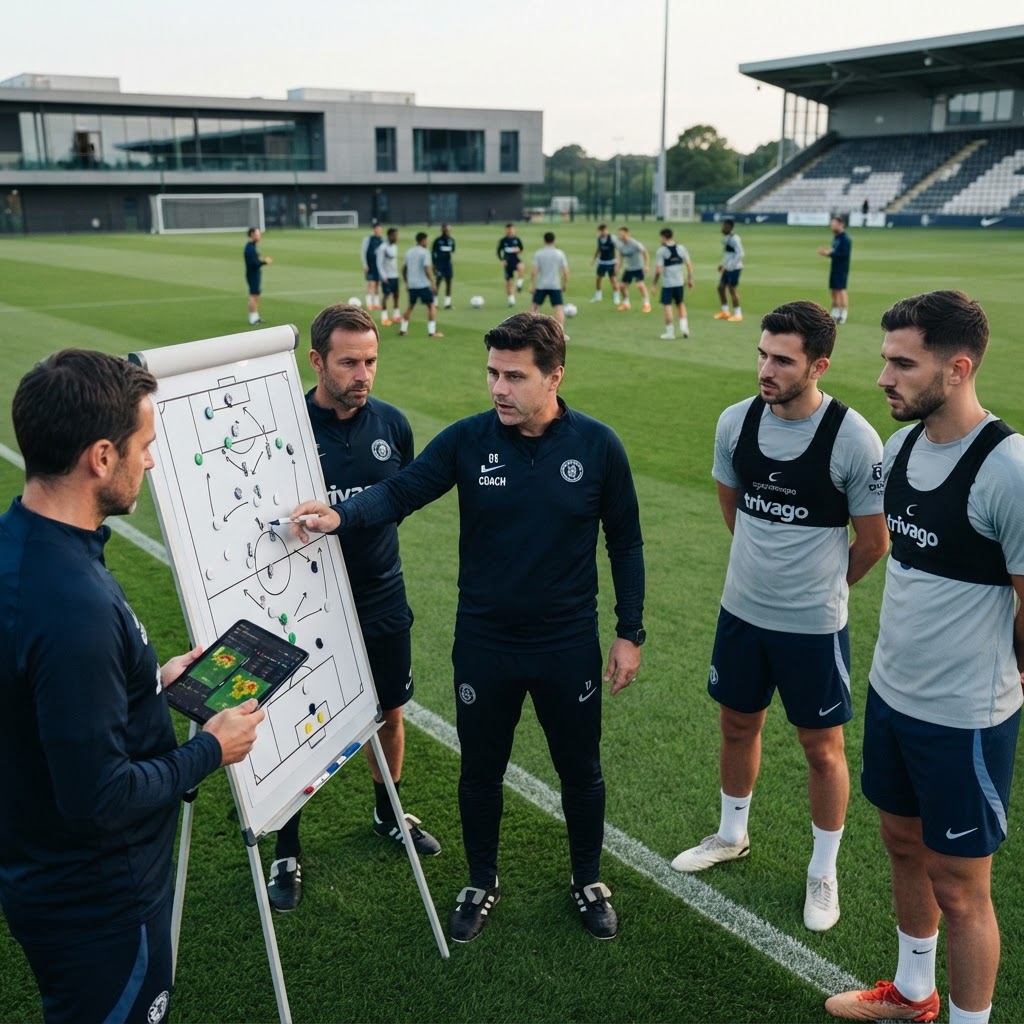
From a consulting and implementation perspective, the decisive question is how to convert the idea into governance, processes, responsibilities, and measurable operational changes within a club or federation. Efficiency in elite football does not lie in the accumulation of tasks, but in the architecture of institutional coherence. Many clubs face the 'transfer gap,' where principles worked on the chalkboard find no echo in the complexity of the match. If the methodology is not aligned with the club's decision-making system, performance will be erratic and dependent on individual inspiration. We must understand training as a cognitive filtering system. Performance architecture requires the technical staff to share a unified operational language that converts tactical complexity into simplified decisions for the player. It is necessary to audit how information reaches the player: Are we bombarding them with contradictory stimuli or refining their decision-making channel? Excellence is not achieved with more information, but with greater filtering capacity. By building an environment where intuition is backed by a reference structure, we move from tactical chaos to competitive fluidity. Let us stop asking the player to guess and build a context that guides them toward optimal execution. Consulting only creates lasting value when the organization can continue to use the system after the consultant leaves.

Explore David Pons professional profile and strategic collaboration

David Pons professional profile

#FootballConsulting #ClubDevelopment #MethodologyImplementation #InnovaFootball #DavidPons #FootballCoach #UEFAPro #FootballLeadership #SportingDirector #HighPerformance
Start a project with our consultants. Efficiency in elite football does not lie in the accumulation of training tasks, but in the architecture of institutional coherence. Many clubs face a silent phenomenon: the transfer gap, where principles worked on the chalkboard find no echo in the complexity of the match. The central thesis is clear: if the training methodology is not aligned with the club's decision-making system, performance will be erratic, relying exclusively on individual inspiration rather than a robust structure. To close this gap, we must understand training not as an exercise, but as a cognitive filtering system. Performance architecture requires that every technical staff member, from physical preparation to video analysis, shares a unified operational language that converts tactical complexity into a series of simplified decisions for the player. The practical implication is direct: it is necessary to audit how the information structure reaches the player. Are we bombarding them with contradictory stimuli or are we refining the decision-making channel? Excellence in high performance is not reached with more information, but with greater capacity for filtering and systemic coherence. The key to a team being competitive lies in the ability of its staff to orchestrate an environment where the player's intuition is backed by an inalienable reference structure. The transition from tactical chaos to competitive fluidity begins when we stop asking the player to guess and start building an architecture where the context itself guides them toward optimal execution. To delve deeper into this integration architecture and raise the strategic level of your organization or technical staff, I invite you to explore our specialized resources: https://institutometodopons.com | https://football.ponsmethod.com | https://ponsmethod.com. Visual note: A schematic graphic showing an information funnel where multiple flows (physical, tactical, analytical) are compressed into a single central path, representing how methodological coherence filters noise to project a clear and coordinated execution on the pitch.